
What Is Athleisure and How Is Quality Performance Apparel Made
Quick answer: Athleisure is a clothing category combining athletic performance features with casual aesthetics for versatile daily wear. It utilizes technical fabrics like moisture-wicking polyester or nylon blends to provide comfort, stretch, and durability in non-athletic settings. This hybrid approach allows garments to transition seamlessly between physical activity and social environments.
Why it matters
Athleisure merges athletic performance textiles with casual aesthetics for versatile daily wear across multiple environments.
Quality construction requires flatlock stitching, reinforced stress points, and consistent seam allowances to ensure durability.
Polyester-spandex and nylon blends provide essential stretch, recovery, and moisture management properties for this category.
Low minimum orders and factory-direct relationships enable brands to test designs without significant upfront inventory risk.
Vertical manufacturing capabilities streamline quality control and reduce lead times for custom private label programs.
Defining the Athleisure Category
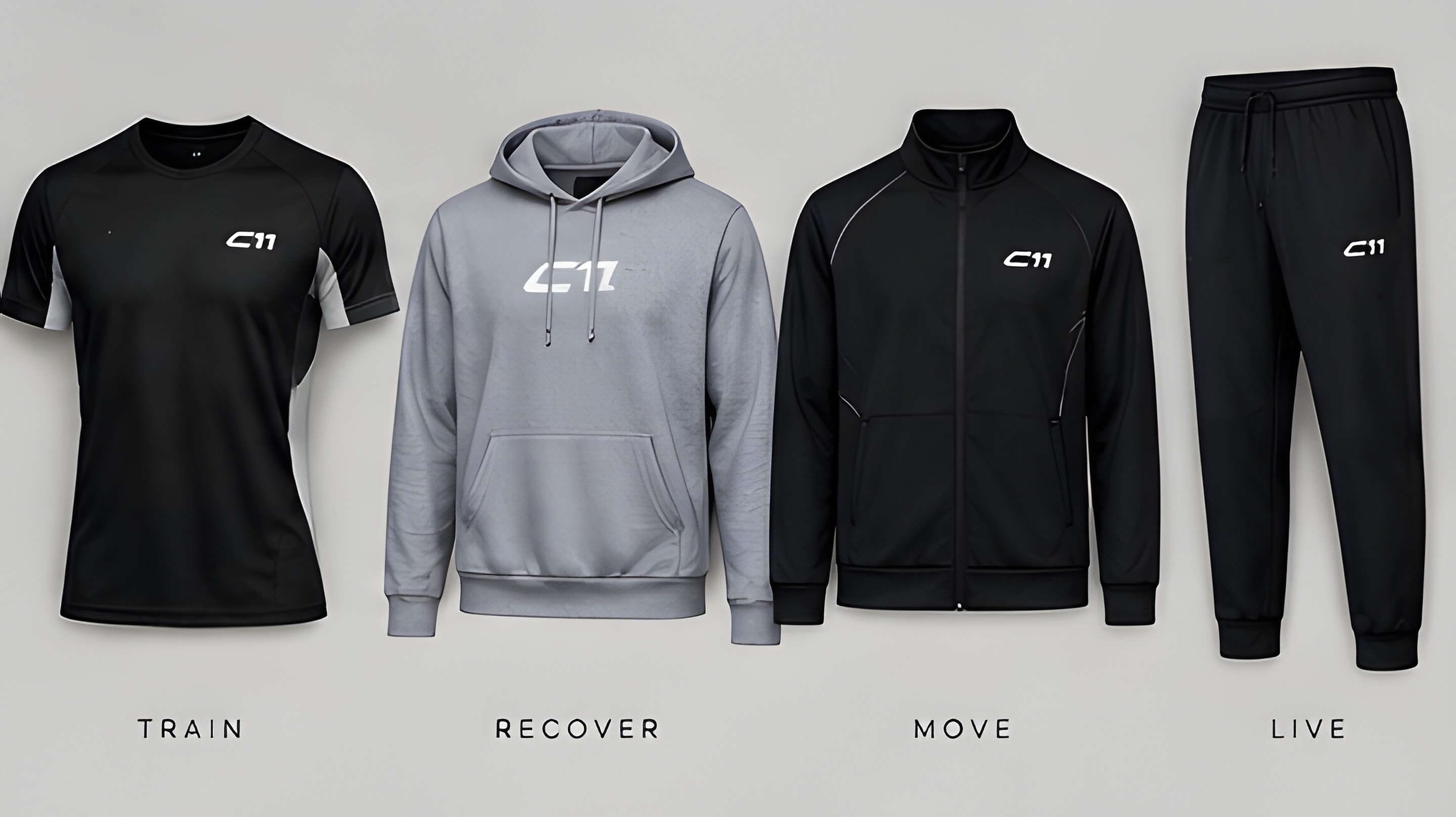
Athleisure represents a distinct segment of the apparel market where sportswear functionality meets everyday fashion. Unlike traditional activewear designed solely for exercise, these garments prioritize aesthetic versatility alongside technical performance. The category includes items such as joggers, hoodies, leggings, and performance t-shirts that feature clean lines and neutral palettes suitable for office or social settings.
The defining characteristic is the integration of performance textiles into lifestyle silhouettes. Manufacturers use four-way stretch fabrics, flatlock seams, and ergonomic patterning typically reserved for competitive sports. However, the visual design avoids overt branding or aggressive athletic styling. This balance ensures the wearer feels comfortable during movement while appearing appropriately dressed for casual professional or leisure contexts. Understanding this duality is essential for brands developing private label collections that meet modern consumer expectations for multifunctional wardrobes.
Technical Fabrics and Material Selection
Material choice dictates both the performance and perceived value of athleisure products. High-quality garments rely on synthetic blends engineered for specific mechanical properties rather than generic cotton. Polyester-spandex blends remain the industry standard due to their moisture management, shape retention, and resistance to pilling. Nylon offers superior softness and abrasion resistance, making it ideal for premium leggings and outerwear layers.
Fabric weight and composition must align with the intended end use. Lightweight knits around 180-220 GSM suit layering pieces and summer tops, while heavier interlocks above 300 GSM provide structure for pants and hoodies. Sourcing teams should verify colorfastness ratings and shrinkage tolerances before bulk production. A written warranty covering fabric integrity helps mitigate risk when scaling private label programs. Consistent dye lots and reliable supply chains are critical for maintaining brand reputation across multiple production runs.
Construction Standards for Hybrid Apparel
Superior athleisure requires construction techniques that withstand repeated wear and washing without losing form. Flatlock stitching reduces chafing and creates smooth interior finishes that elevate the garment's tactile quality. Reinforced bar tacks at stress points like pocket corners and waistbands prevent premature failure. Seam allowance consistency ensures symmetrical fit across all sizes, which is vital for customer satisfaction in direct-to-consumer models.
Printing and embellishment methods must complement the fabric's stretch properties. Sublimation printing embeds ink directly into polyester fibers, resulting in vibrant graphics that do not crack or peel. Embroidery requires proper stabilization to avoid puckering on knit fabrics. Brands should request digital mockups and physical samples to validate print placement and thread density. All processes occurring under one roof streamline quality control and reduce lead times compared to outsourcing decoration separately from cut-and-sew manufacturing.
Sourcing and Production Considerations
Brands entering the athleisure space face decisions regarding minimum order quantities and geographic logistics. Low minimums starting from 25 pieces per style enable testing new designs without excessive inventory risk. Factory-direct relationships eliminate trading-house markups, improving margin potential for emerging labels. Duty-paid shipping options simplify landed cost calculations for buyers in the US, UK, and EU markets.
Evaluating a manufacturer involves assessing their vertical capabilities. Facilities handling design, cutting, sewing, printing, and packing internally offer greater accountability than fragmented supply chains. Requesting a free digital mockup within 48 hours serves as an initial test of responsiveness and technical competence. Transparent communication about production timelines and quality assurance protocols builds trust. Brands should prioritize partners who understand the nuanced requirements of performance-casual hybrids over generalist apparel factories lacking specialized expertise.
Market Positioning and Consumer Expectations
Success in athleisure depends on accurately positioning products within a crowded marketplace. Consumers expect genuine performance attributes even in lifestyle-focused designs. Marketing claims must be substantiated by actual fabric specifications and construction details. Transparency about materials and manufacturing origins builds credibility with discerning buyers who research purchases thoroughly.
Private label brands can differentiate through exclusive fabric developments or signature fit profiles. Custom sportswear manufacturers often assist schools, universities, clubs, and organizations in creating cohesive team identities that extend beyond competition uniforms. These institutional clients value durability and consistent reordering capabilities as much as style. Aligning product development with specific audience needs prevents overextension. Focused collections addressing defined use cases outperform broad assortments attempting to serve everyone simultaneously.
Frequently asked questions
What distinguishes athleisure from regular activewear?
Athleisure prioritizes aesthetic versatility for non-athletic settings while retaining performance features like stretch and moisture management. Regular activewear focuses primarily on optimizing function during specific sports or exercises, often featuring bold branding and technical cuts unsuitable for casual social environments.
Which fabrics are best for high-quality athleisure?
Polyester-spandex and nylon-spandex blends offer the optimal combination of stretch, recovery, moisture wicking, and durability required for athleisure. Cotton lacks necessary performance properties unless blended with synthetics, while pure natural fibers generally fail to maintain shape or manage sweat effectively during extended wear.
What minimum order quantity is typical for custom athleisure?
Specialized manufacturers may offer minimums as low as 25 pieces per style for custom athleisure production. This threshold allows brands and organizations to test new designs or fulfill smaller team orders without committing to large-scale inventory investments typical of traditional apparel manufacturing.
How does sublimation printing benefit athleisure garments?
Sublimation printing permanently bonds ink to polyester fibers, creating graphics that stretch with the fabric without cracking or fading. This method preserves the garment's breathability and hand feel unlike screen printing, which adds a surface layer that can compromise comfort and flexibility in performance apparel.
Why is factory-direct manufacturing advantageous for athleisure brands?
Factory-direct manufacturing eliminates intermediary markups and improves communication efficiency between designers and production teams. Direct access to facilities handling all processes under one roof enables faster sampling, tighter quality control, and more accurate duty-paid shipping estimates for international buyers.